FlowShift for managers · Part 1
How it works
For a manager who runs Saturdays out of WhatsApp.
Guide 2 of 3 · 14 slides
For a manager who runs Saturdays out of WhatsApp.
Swipe, use the arrows, or press ← →.
FlowShift for managers · Part 1
For a manager who runs Saturdays out of WhatsApp.
Today
Which works, right up to the moment somebody asks a question.
Scroll up and count thumbs.
Answer it nine times.
Take their word for it.
You find out Saturday.
Step 1 · Build it
The exact line you would have typed into the group chat, typed here instead.
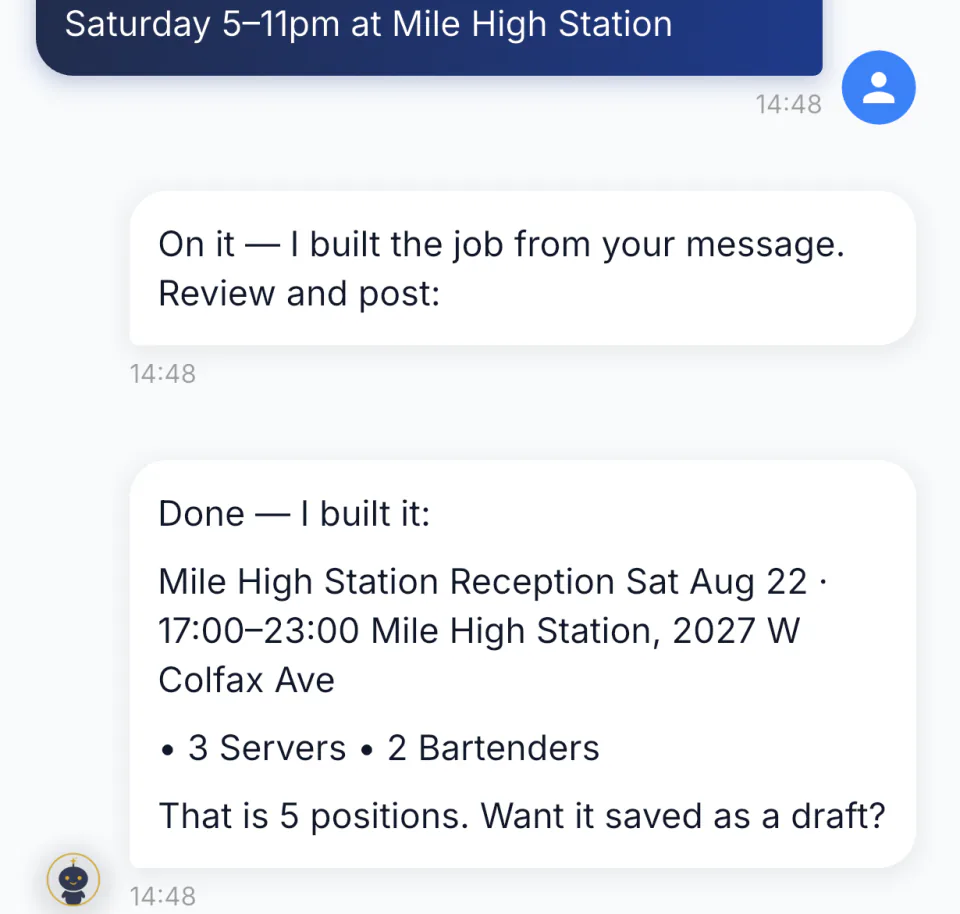
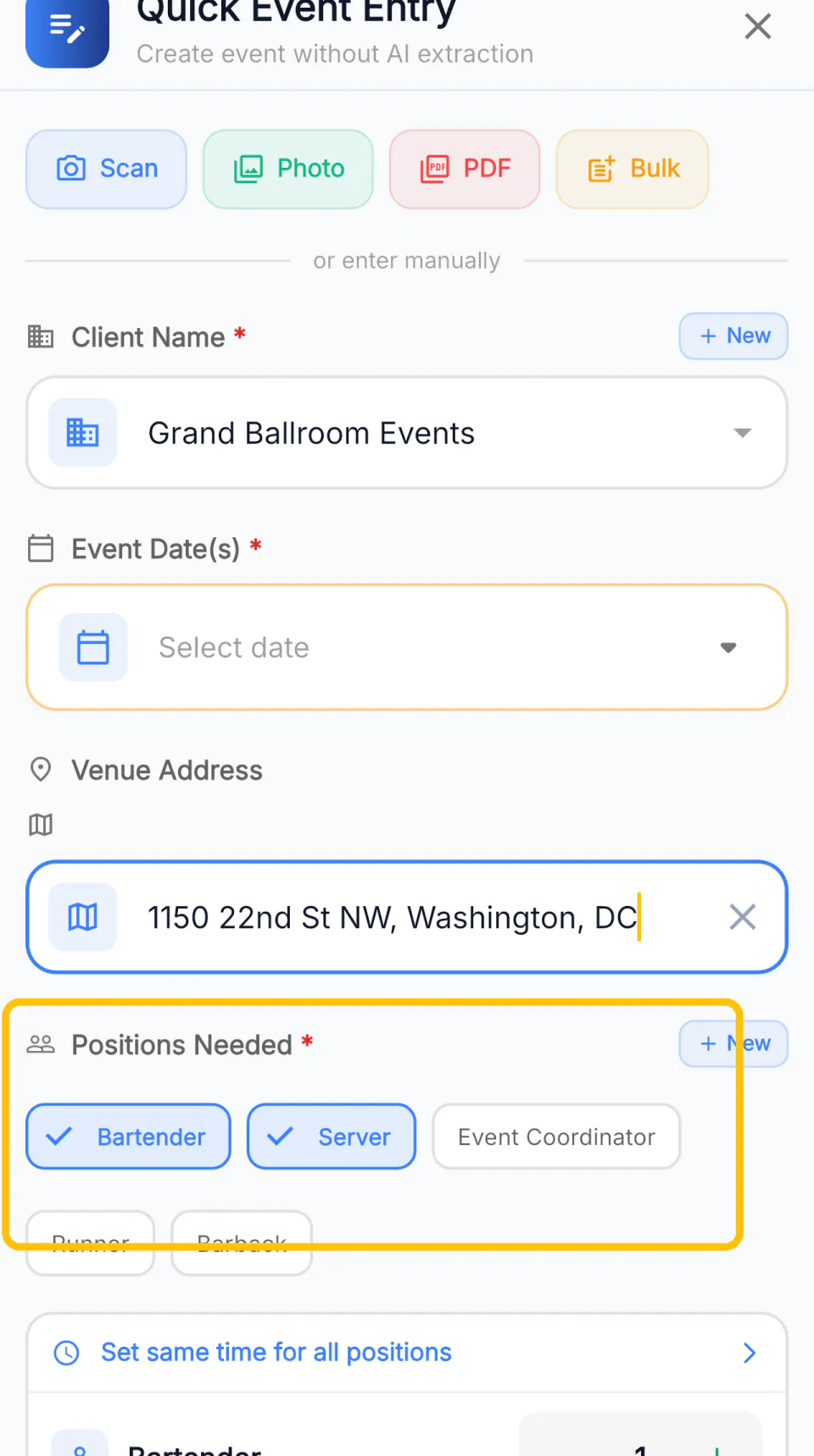
What a job is
Everything else in FlowShift hangs off those four. Fill them in yourself, or let the assistant do it and correct what it guessed wrong.
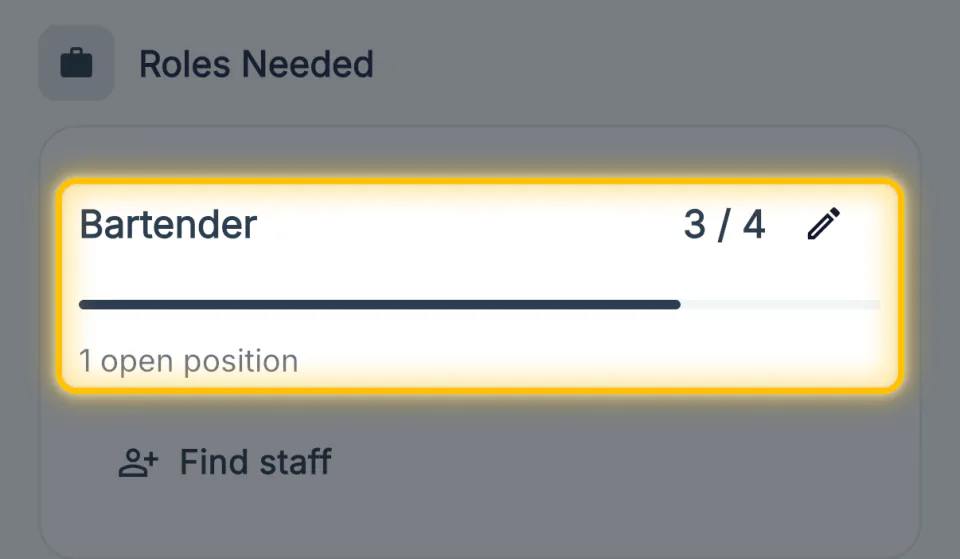
The one to remember
Four bartenders means four people can say yes. Three have. The fourth yes closes the role by itself.
Step 2 · Post it
One team, every team, or named people. Nothing leaves your hands until you tap Post.
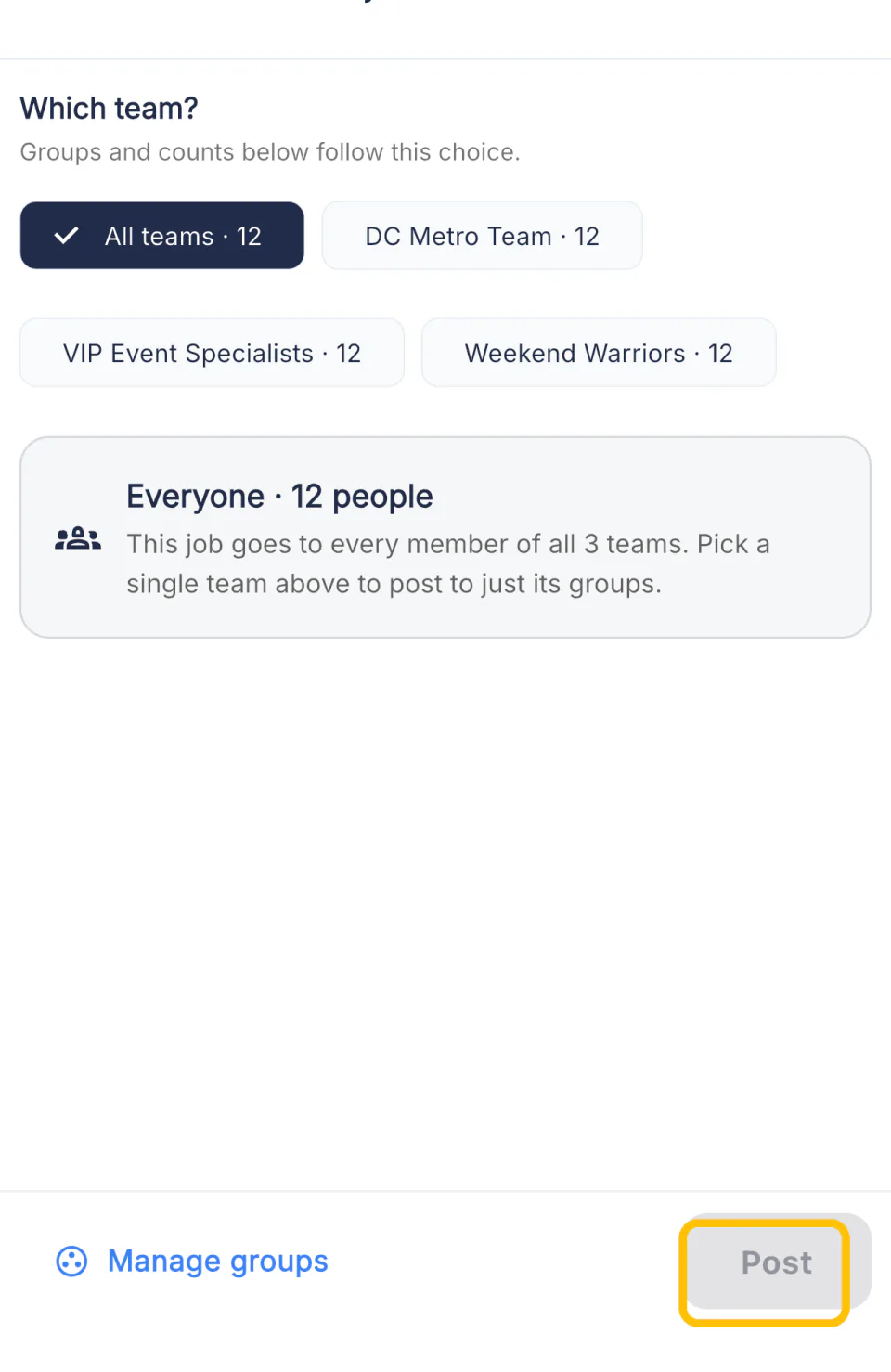
Your teams see it and claim their own slot. Fastest fill.
You need nine and do not mind which nine.
Only the people you name see it, each with a role.
The client wants the same four servers.
You place the person. No waiting for a yes.
Your captain always works this venue.
What it costs
A nine-slot gala costs nine. Not one job — nine people.
Build twenty on a Sunday and spend nothing.
Unpublish or delete and they come back.
You used the capacity to ask. That was the point.
Six servers up to eight costs two, not eleven.
| Date | What happens | Left to use |
|---|---|---|
| 1 Sept | 120 land, good until 30 Nov | 120 |
| through Sept | You post jobs worth 95 slots | 25 |
| 1 Oct | 120 more land, good until 29 Dec | 145 |
| 12 Oct | Nine-slot gala posts, taken from September first | 136 |
| 20 Oct | The client cancels and the nine come back | 145 |
| 30 Nov | Whatever is left of September expires | October only |
Yours alone. Free.
You tapped Post.
Last slot taken.
Start time passed.
Shift ended.
Hours approved.
Gold is you. White is the clock. A job nobody took ends as empty, never as done — so a slow month reads honestly.
Step 3 · It fills
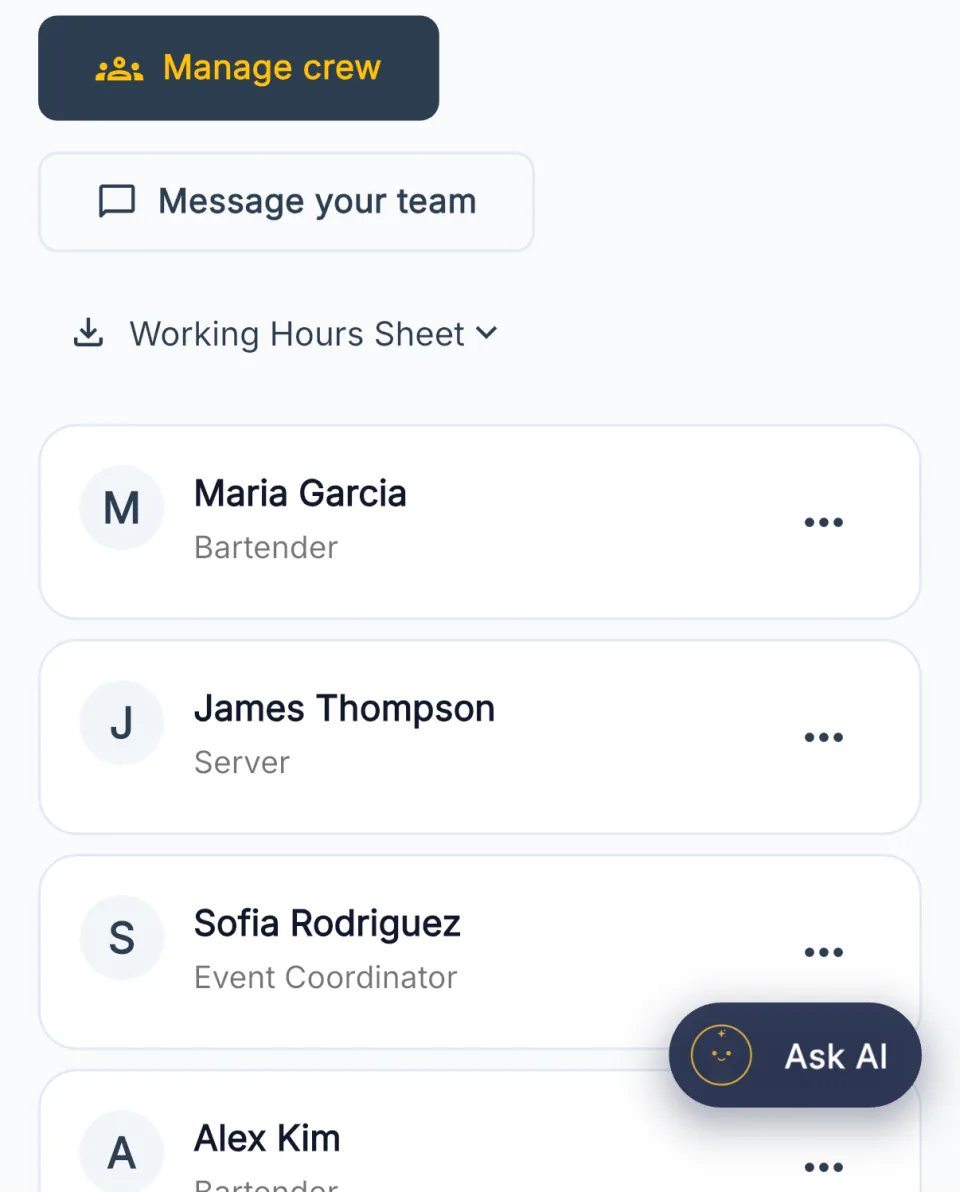
No thread to scroll, no thumbs to count. Who is on, in what role, is a list you look at once — and the whole crew is one tap from a message.
Step 4 · Close it out
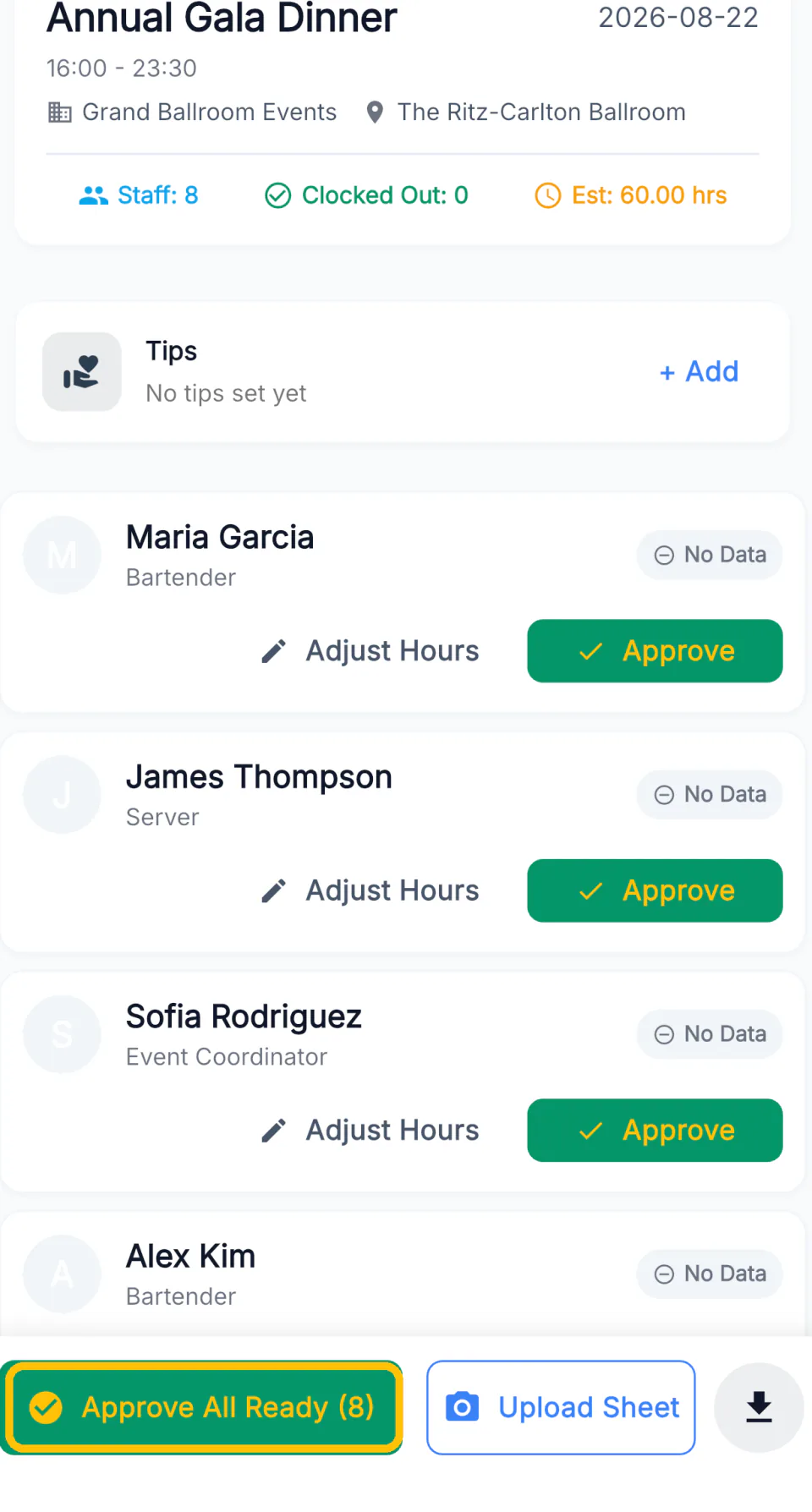
Upload the sheet the client signed, then approve the whole crew in one tap. Approving locks each rate, so changing your prices in December cannot rewrite what November cost.
Take this away
And the one that bites: the count is the capacity.
How it works
Where the manager is today: the job lives in WhatsApp
1How it worksWhat a job is, and how one gets built and posted
4Send the same message. Get a job.What publishing costs, and how a job closes itself
9One position is one person you put in front of staff.